
Small Living Room Mistakes: 6 Design Sabotaging Habits

Achieving a spacious feel in a compact layout starts with selecting the right living room furniture that balances scale with functionality. In the competitive landscape of Canadian urban living, where square footage comes at a premium, the way you arrange a small living area can either expand its potential or make it feel claustrophobic. At Lusso Modern Home, we believe that “small” is not a limitation—it is a design challenge that requires a more disciplined approach to furniture and flow. Most homeowners unknowingly sabotage their space by following traditional decorating rules that don’t apply to compact spaces. To create a room that feels both high-end and breathable, you must learn to identify the common missteps that lead to visual congestion and functional friction. To help you navigate these design choices, the following table compares common pitfalls with the strategic adjustments needed to maximize your living area.
| Design Parameter | The “Lusso” Approval (Do) | The Design Rejection (Don’t) | Reason for Rejection |
| Furniture Scale | Single Statement Piece: One large, well-scaled sofa anchors the room. | Multiple Tiny Pieces: Using many small chairs creates visual noise. | It creates a “dollhouse” effect that feels cluttered and disjointed. |
| Rug Dimensions | Oversized Rug: A rug reaching all furniture legs expands the floor plane. | Small Accent Rug: A “postage stamp” rug visually chops the floor. | It makes the room feel fragmented and highlights small dimensions. |
| Furniture Legs | Leggy Pieces: Furniture with visible legs allows light and air to flow under. | Blocky/Solid Bases: Heavy, floor-hugging pieces act as visual anchors. | Solid bases block sightlines, making the floor area feel cramped. |
| Wall Utilization | Vertical Elements: Floor-to-ceiling shelves or mirrors draw the eye upward. | Low-Level Decor: Keeping all decor at waist height wastes volume. | It ignores the room’s height, making the ceiling feel lower. |
| Window Styling | High-Mounted Rods: Placing rods near the ceiling simulates taller walls. | Window-Level Mounting: Hanging rods right at the frame cuts the wall. | It makes the room feel “boxed-in” and reduces perceived height. |
| Lighting Layers | Multi-Level Lighting: Using sconces and floor lamps creates 3D depth. | Single Overhead Source: Relying only on a central ceiling light. | Flat lighting eliminates shadows, making the room look small and flat. |
The Scaling Paradox: Why Small Furniture Isn’t the Answer
The most persistent myth in small-space design is that a tiny room requires tiny furniture. In reality, a collection of small-scale chairs and tables often creates what designers call “visual noise,” making the room appear cluttered and disorganized. This is the Scaling Paradox: a single, well-proportioned sectional or a substantial sofa can actually make a room feel larger by providing a singular, strong focal point. Instead of multiple fragmented pieces, aim for one or two “hero” items that command the space. Furthermore, avoid the mistake of the “postage stamp” rug; a rug that is too small for the room visually shrinks the floor. A larger rug that extends under the furniture legs anchors the room and creates an expansive, continuous plane for the eye to follow.
Architectural Sabotage: Lighting and Vertical Misuse
A common oversight is focusing only on the floor plan and forgetting that a room is a three-dimensional cube. When you ignore a space’s verticality and light sources, you effectively “lower” the ceiling and “pull in” the walls.
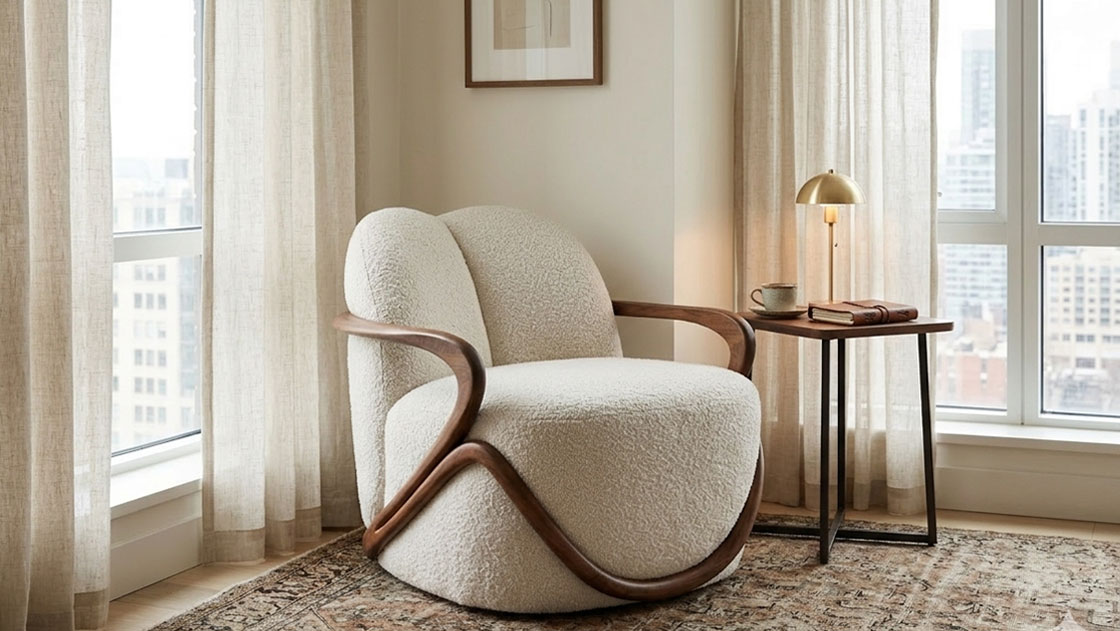
- Blocking Light Channels: Heavy, opaque drapery is a significant error. By obstructing natural light, you lose the depth that shadows and highlights provide. Use sheer treatments or mount your curtains above the window frame to draw the eye upward and create the illusion of height.
- The “Wall-Hugging” Habit: It is a reflex to push all furniture against the perimeter to “open up” the center. However, this often highlights the room’s small dimensions. “Floating” a sofa even a few centimeters away from the wall creates a sense of airiness and suggests that the room is large enough to afford some extra space.
- The Single-Light Trap: Relying on a central ceiling fixture flattens everything in the room. Layered lighting is essential in small spaces. By adding floor lamps or wall sconces, you create pockets of light and shadow that add architectural depth and prevent the space from feeling like a cramped box.
Small Living Room Mistakes
Editorial Restraint: Avoiding the Clutter Trap
A small living room must be curated with the precision of a gallery. The urge to display every personal memento or trendy accessory is a mistake that leads to an overwhelming environment.
- Lack of Multi-functionality: In a limited footprint, every object must justify its existence. Choosing a coffee table without storage or a side chair that can’t be easily moved are missed opportunities for efficiency.
- Visual Congestion: Too many contrasting patterns and textures can be exhausting in a small area. At Lusso Modern Home, we recommend a “tonal layering” approach—using different shades of the same colour to add richness without the chaos of competing designs. By practicing editorial restraint, you allow the architecture of the room to breathe, which is the true mark of luxury.
Comparison Guide: Small Space Correction
Correcting the visual proportions of a small living room requires a shift from “filling space” to “creating depth.” Many homeowners fall into the trap of buying smaller items to fit a smaller room, but this often results in a fragmented, cluttered atmosphere. At Lusso Modern Home, we advocate a strategic approach in which fewer, larger pieces act as anchors, and vertical elements draw the eye upward. By understanding the relationship between furniture scale, light distribution, and floor visibility, you can effectively “cheat” the eye into perceiving more square footage. The following guide outlines the essential shifts you need to make to transition from a cramped layout to a sophisticated, airy retreat.
Embracing Negative Space
The goal is to master “negative space”—the intentional empty areas that allow the design to stand out. It is better to have one beautifully crafted piece and an empty corner than to fill every gap with mediocre decor. At Lusso Modern Home, our focus is on providing those high-quality anchors that don’t just fill a room, but define it. By avoiding these common structural and functional mistakes, you can turn a modest living area into a sophisticated sanctuary that feels intentionally spacious and undeniably modern.
Conclusion
Navigating the design of a small living room is ultimately about making fewer, but more intentional choices. By steering clear of common pitfalls like improper scaling, obstructed natural light, and over-ornamentation, you can curate a space that feels both balanced and high-end. The footprint of your home shouldn’t dictate its style—your strategy should. At Lusso Modern Home, we provide the expertise and curated pieces to unlock your home’s true potential, ensuring your living space remains a source of comfort and pride, regardless of its square footage.